






The Moroccan sardine, the true sardine, the "Sardina Pilchardus" is today internationally recognized and its "true sardine" name is protected by international regulations.
It is an excellent fish, it combines gourmet pleasure and conviviality, culinary tradition and modernity, simplicity and speed of preparation, authenticity and natural setting. What is mostly not known is its nutritional qualities:
- It's one of the best sources of Omega 3
- It is rich in micro nutrients that are good for health: calcium, selenium, phosphorus, vitamin D and B.
- It has high quality protein.
A simple and gourmet product ... which is much more than that!

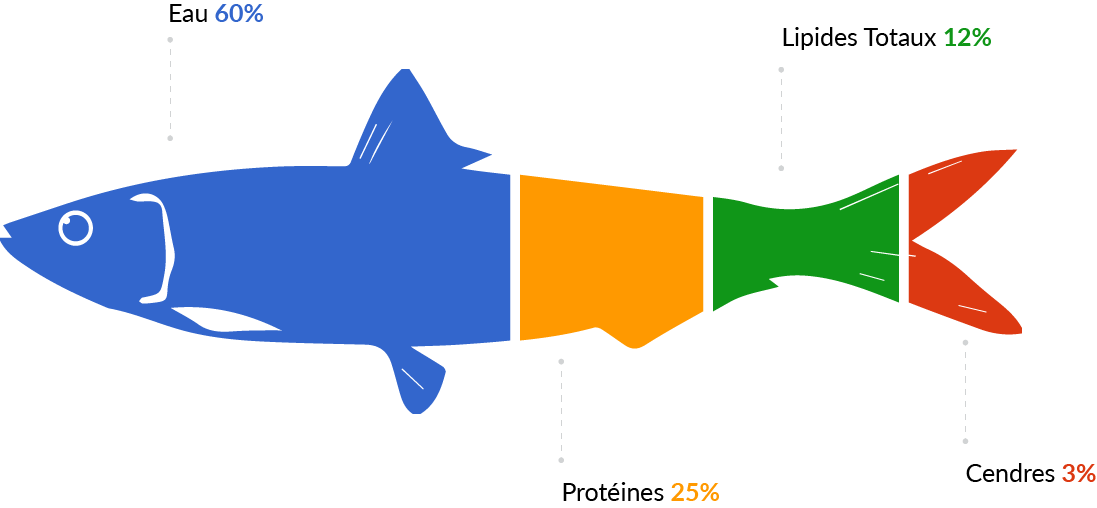
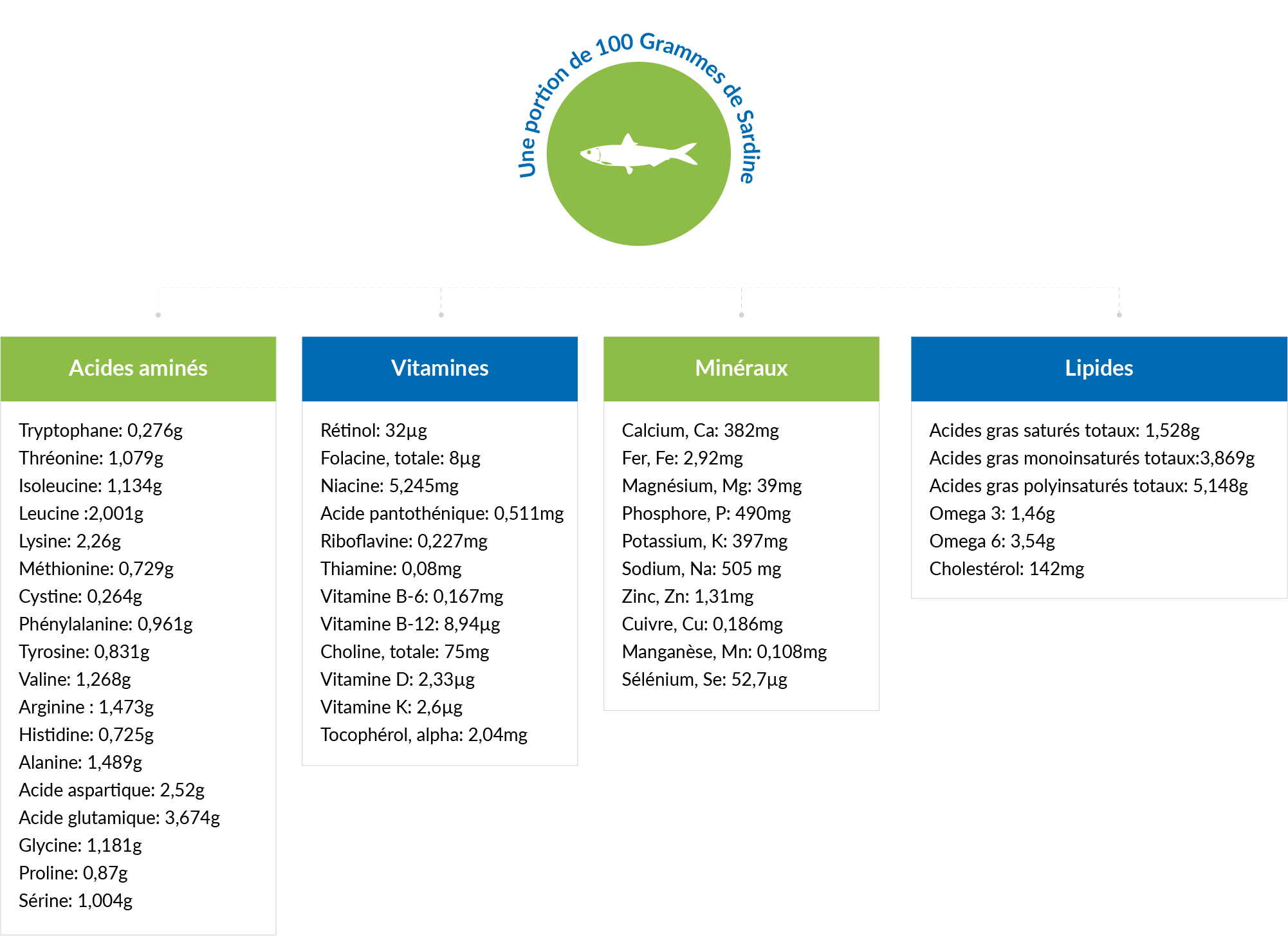
- The sardine is a source of protein and contains the nine essential amino acids that are not produced by our body and must come from our diet. These proteins play a major role in the building of digestive enzymes, hormones and tissues, like the skin and the bones.
- The Moroccan sardine provides eicosapentaenoic acid and docosahexaenoic acid, two fatty acids from the omega 3 family with protective effects on the cardiovascular system. Some scientific researches have affirmed that these omega 3 have anti-inflammatory effects that are useful in the treatment of pathologies like; asthma, rheumatoid arthritis, psoriasis and inflammatory bowel diseases, they also help prevent mood disorders such as depression. Moreover, the docosahexaenoic acid participates in the development and functioning of the brain and the maintenance of cognitive functions and vision.
- Finally, the sardine is rich in oligo-elements: Vitamin D for example plays a major role in the metabolism of calcium in the body: it is necessary for healthy bones and teeth; The selenium for example has antioxidant properties that have been widely demonstrated.
Note : When pregnant, women need more micronutrient. The sardines contribute to optimal coverage of mothers and children needs since they’re endowed with excellent levels of complete protein, calcium, vitamin D, iron, and omega-3 fatty acids.
One of the cheapest fish but the best when it comes to nutrition, the Sardine is a source of micronutriments vital to maintaining the balance of the body
Nutrient |
Rôle |
| Calcium |
Calcium is by far the most abundant mineral in the body. It is mostly stored in bones and is an integrated party of it. It contributes to the building of bones and teeth, as well as the maintenance of their health. Calcium also plays a vital role in blood clotting, blood pressure maintaining and muscles contraction (including the heart). |
| Vitamin D |
Vitamin D is closely involved in the health of bones and teeth by making calcium and phosphorus available in the blood, plus other things in order to grow the bone structure. The vitamin D also plays a role in the maturation of cells, including those of the immune system. |
| Iron |
This mineral is mandatory for the transport of oxygen and the formation of red blood cells in the blood. It also plays a role in the production of new cells, hormones and neurotransmitters. |
|
Copper |
As a component of several enzymes, copper is necessary for the formation of hemoglobin and collagen (protein for the structure and tissue repair) in the body. Several enzymes that contain copper also contribute to the body's defense against free radicals. |
| Selenium |
This mineral works with one of the main antioxidant enzymes, preventing the formation of free radicals in the body. It also helps to convert thyroid hormones into their active form. |
| Vitamin B12 |
This vitamin works with vitamin B9 (folic acid) to produce red blood cells in the blood. It also maintains the nerve cells and the cells making the bone tissue. |
| Phosphorus |
The phosphorus is the second most abundant mineral in the body after the calcium. It plays a vital role in the formation and maintenance of healthy bones and teeth. In addition, it participates among other things in the growth and regeneration of tissues and helps regulating the pH of the blood. Finally, the phosphorus is one of the constituents of cell membranes. |
| Zinc |
Zinc participates in the immune system reactions, the production of genetic material, the taste perception, the wound healing and the fetal development. It also interacts with sexual and thyroid hormones. In the pancreas, it participates in the production, storage and release of insulin. |
| Vitamin B2 |
This vitamin is also known as riboflavin. Like vitamin B1, it plays a role in the energy metabolism of all cells. In addition, it contributes to the growth and repair of tissues, the production of hormones and the formation of red blood cells. |
| Vitamin B3 |
Also called niacin, the vitamin B3 participates in many metabolic reactions and contributes particularly to the production of energy from carbohydrates, lipids, proteins and alcohol that we ingest. It also contributes in the process of DNA formation, allowing normal growth and development. |