






The Moroccan octopus is undoubtedly the most esteemed and coveted by gourmets from all over the world. Its flavor transports you instantly to the Atlantic seas of southern Morocco, a real treat.
The Moroccan octopus contains excellent nutrients for health especially vitamin B12 and Omega 3.
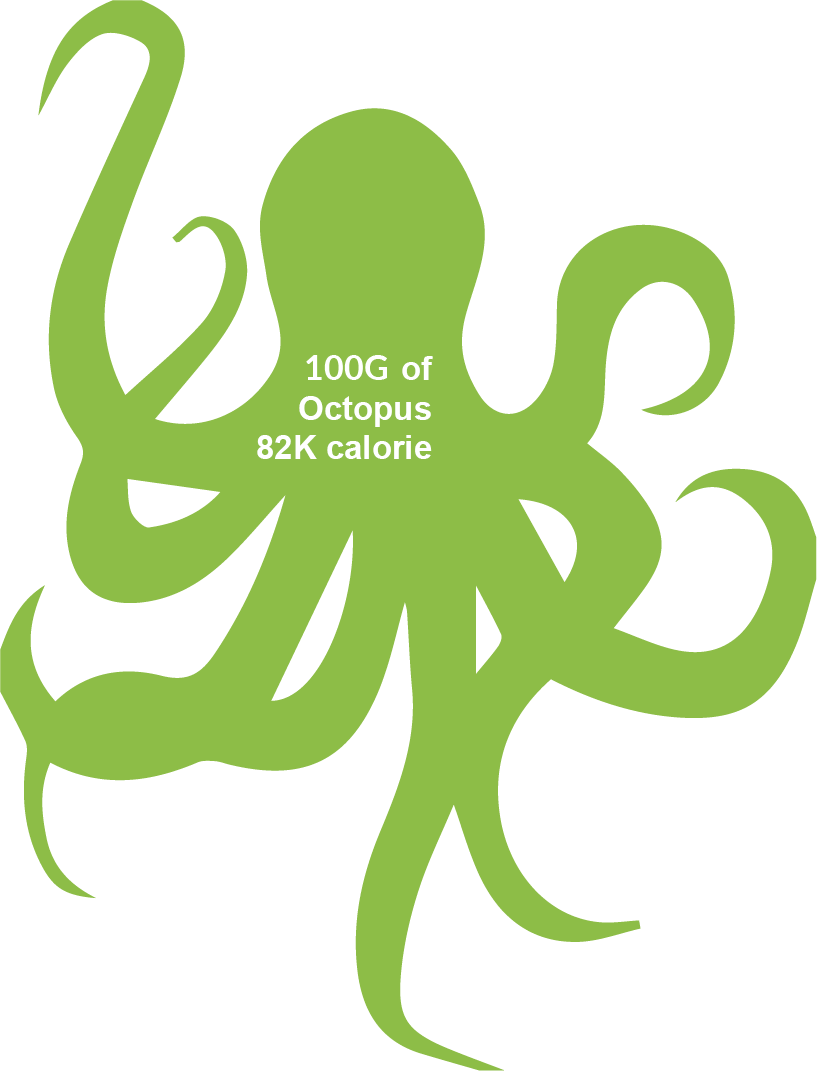
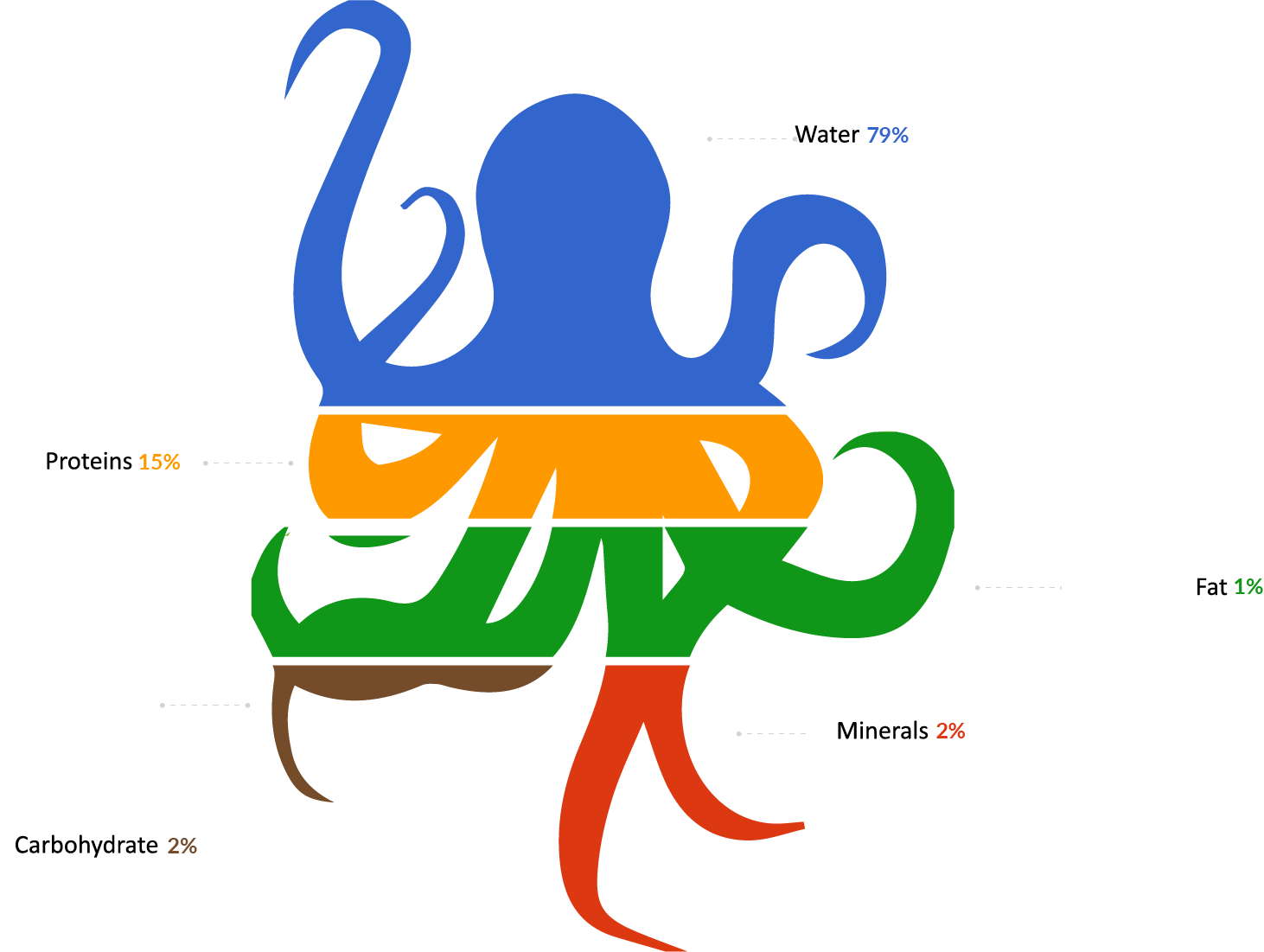
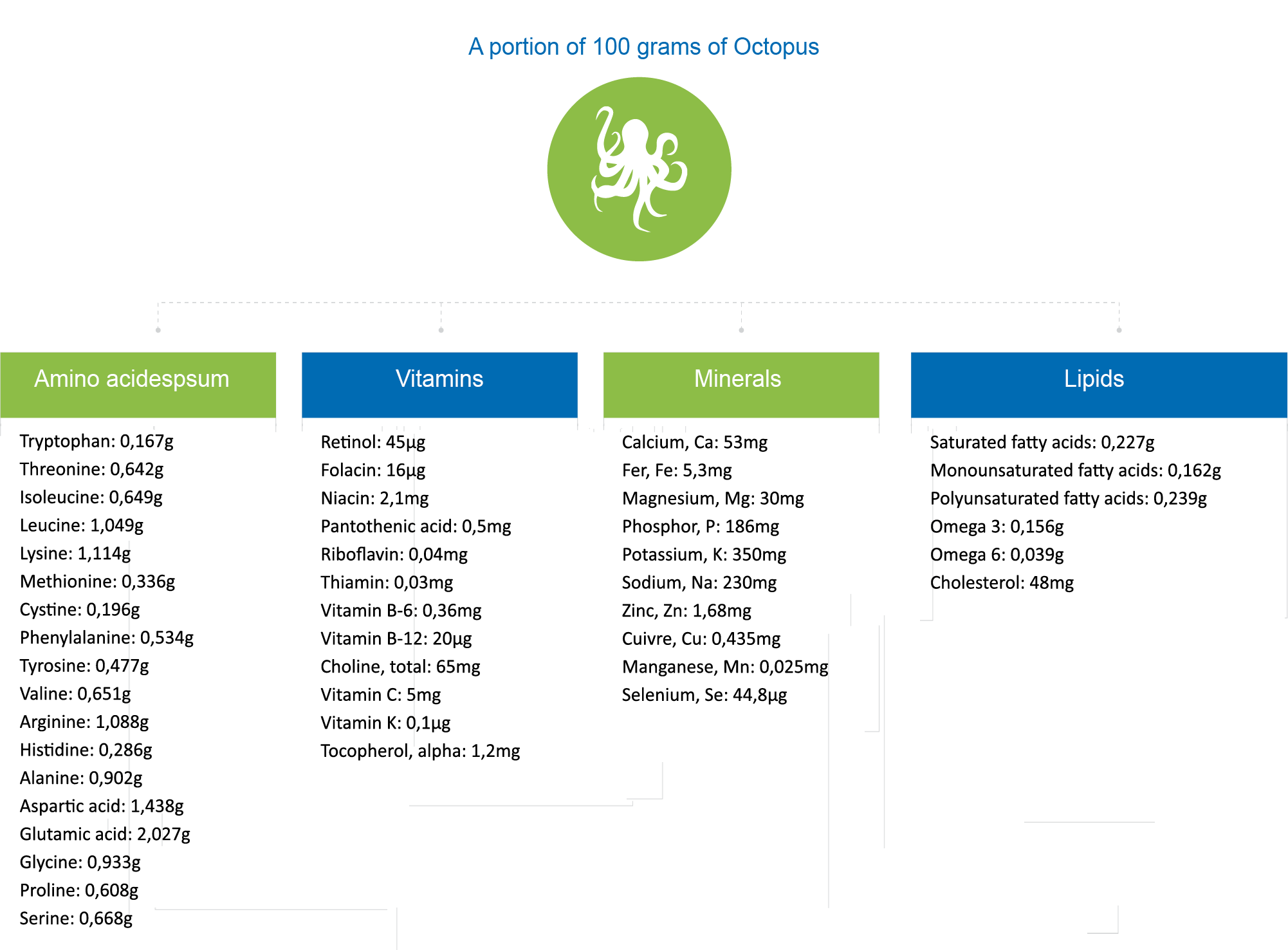
Very good for the figure, the octopus is rich in protein while being low in fat. It is recommended as part of a low-calorie diet or more generally, for light and balanced meals. Like all sea creatures, it is also very rich in minerals and oligo elements that are vital for our body balance. Although it is slightly oily, the octopus contains eicosapentaenoic acid (EPA) and docosahexaenoic acid (DHA), two fatty acids that are part of the family of the omega-3. They act as precursors of chemical messengers favoring a good immune, circulatory and hormonal functioning. Several epidemiological and clinical studies have shown that the consumption of omega-3 fatty acids, mainly of marine origin, would have positive effects on cardiovascular health and reduce cardiovascular diseases risk. These fatty acids act on several aspects that include reducing blood pressure, blood triglycerides and blood clots, which results in reducing the risk of atherosclerosis.
The Octopus has important nutrients that play a major role in the balance of the body and contribute to good health.
| Nutriment | Rôle |
| Iron | This mineral is mandatory for the transport of oxygen and the formation of red blood cells in the blood. It also plays a role in the production of new cells, hormones and neurotransmitters. |
| Copper | As a component of several enzymes, copper is necessary for the formation of hemoglobin and collagen (protein for the structure and tissue repair) in the body. Several enzymes that contain copper also contribute to the body's defense against free radicals. |
| Selenium | This mineral works with one of the main antioxidant enzymes, preventing the formation of free radicals in the body. It also helps to convert thyroid hormones into their active form. |
| vitamin B12 | This vitamin works with vitamin B9 (folic acid) to produce red blood cells in the blood. It also maintains the nerve cells and the cells making the bone tissue. |
| Phosphorus | The phosphorus is the second most abundant mineral in the body after the calcium. It plays a vital role in the formation and maintenance of healthy bones and teeth. In addition, it participates among other things in the growth and regeneration of tissues and helps regulating the pH of the blood. Finally, the phosphorus is one of the constituents of cell membranes. |
| Zinc | Zinc participates in the immune system reactions, the production of genetic material, the taste perception, the wound healing and the fetal development. It also interacts with sexual and thyroid hormones. In the pancreas, it participates in the production, storage and release of insulin. |
| Vitamin B6 | Also known as pyridoxine, it is part of the coenzymes that participate in the metabolism of proteins and fatty acids as well as the synthesis (production) of neurotransmitters (messengers in nerve impulses). It also interacts in the production of red blood cells and allows them to carry more oxygen. The pyridoxine is also necessary for the transformation of glycogen into glucose and it contributes to the proper functioning of the immune system. This vitamin has also a role in the formation of certain components of nerve cells and in the modulation of hormonal receptors. |
| Magnesium | Magnesium participate in bone development, protein formation, enzymatic actions, muscle contraction, dental health, and the functioning of the immune system. It also plays a role in the metabolism of energy and in the transmission of nerve impulses. |
| Potassium | It balances the pH of the blood and stimulate the stomach to produce hydrochloric acid, thus promoting digestion. In addition, it facilitates the contraction of muscles, including the heart, and collaborates in the transmission of nerve impulses. |
| Vitamin B3 | Also called niacin, the vitamin B3 participates in many metabolic reactions and contributes particularly to the production of energy from carbohydrates, lipids, proteins and alcohol that we ingest. It also contributes in the process of DNA formation, allowing normal growth and development. |
| Panthotenic acid (vitamin B5) | This vitamin is part of a major coenzyme that allows the body to use the energy extracted from ingested foods. It also participates in several stages of the production of steroid hormones and neurotransmitters |
| Vitamin C | The role that vitamin C plays is more important than being a simple antioxidant. It also contributes to healthy bones, cartilage, teeth and gums. In addition, it protects against infections, promotes the absorption of iron contained in plants and accelerates wound healing. |
| Vitamin E | As a major antioxidant, the vitamin E protects the membrane that surrounds the cells of the body, particularly red blood cells and white blood cells (immune system cells). |
Note: The octopus also contains taurine, an organic acid that acts as an antioxidant and can protect against some of the stressful effects of physical exercise. Some authors believe that taurine has the ability to help prevent heart disease. Other studies have mentioned that the taurine helps to balance the blood sugar levels.