






The Moroccan squid lives in a protected marine environment and has a delicate taste and a unique texture that will satisfy all the gourmets. It provides many nutrients as well as considerable intake of protein, iron, vitamin D and omega-3 fatty acids that are necessary for the balance of our health.

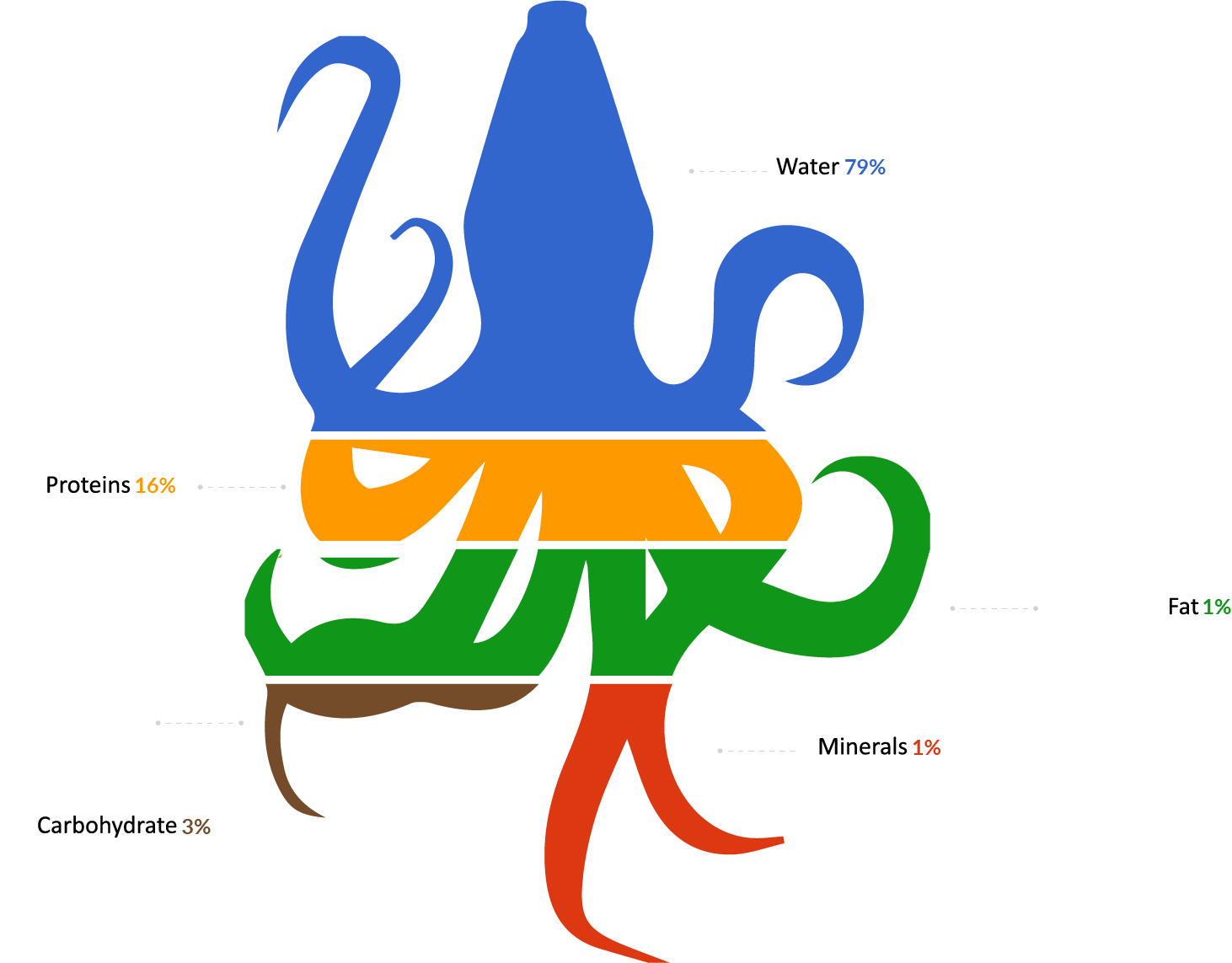
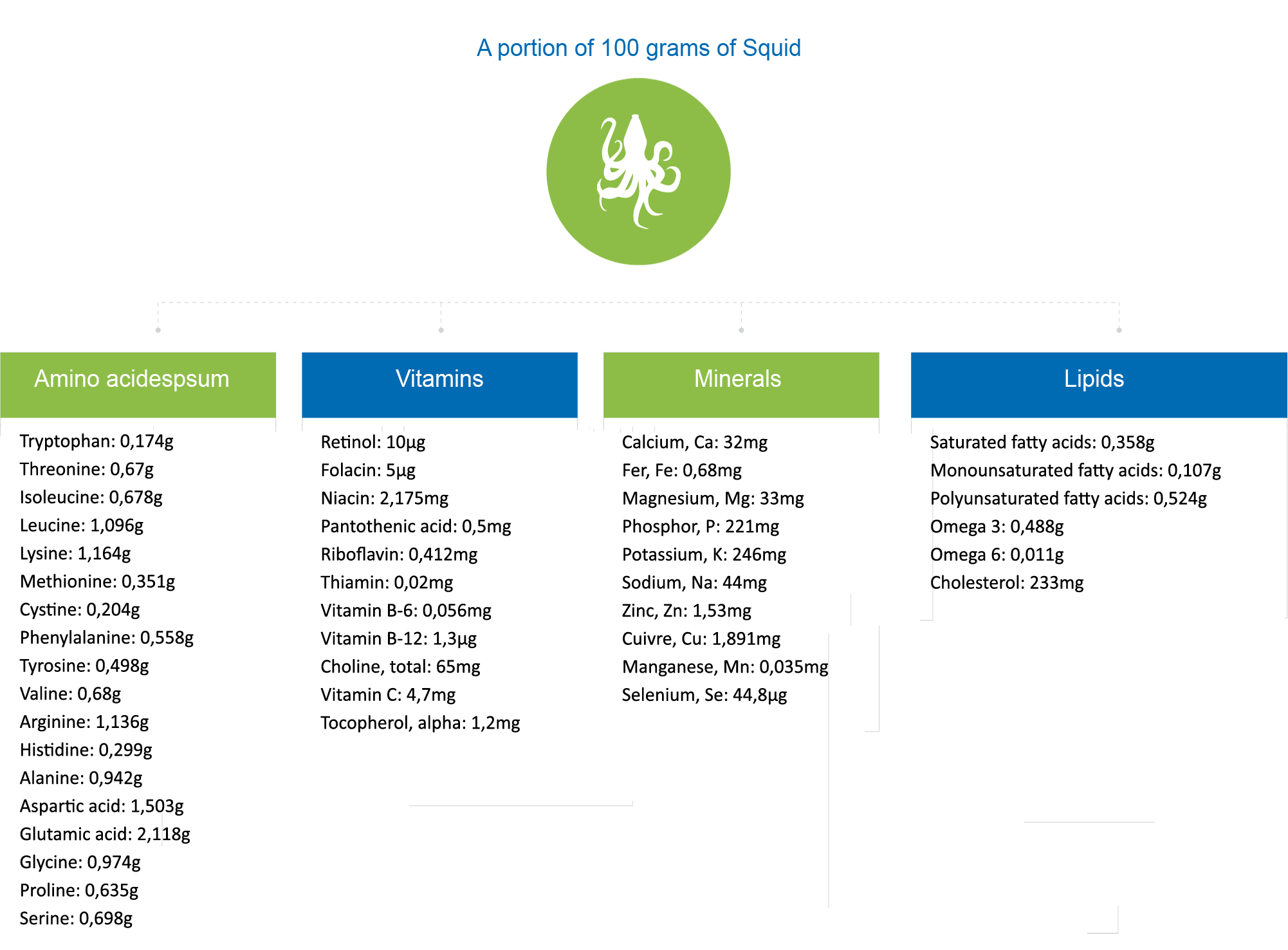
The squid is highly recommended in a low-calorie diet and is very rich in proteins that are used to maintain the integrity of tissues like the skin, muscles and bones and the formation of digestive enzymes and hormones. It is also full of minerals and oligo elements that are necessary for the balance of our body, even if it is low in fat, it contains the famous omega 3, most specifically the eicosapentaenoic acid (EPA) and the docosahexaenoic acid (DHA) which favors immune, circulatory and hormonal functions and reduce blood pressure, blood triglycerides and blood clots.
The squid has little fat and many valuable nutrients and is excellent in a low calorie diet. Its regular consumption allows taking advantage of various health benefits without risk. The Squid is rich in protein as well as in copper, selenium and B12 vitamins, it contains many other essential nutrients that are good for health.
| Nutriment | Rôle |
| Vitamin B2 |
The squid is an excellent source of vitamin B2, which is also known as riboflavin. Like vitamin B1, it plays a role in the energy metabolism of all cells. In addition, it contributes to the growth and repair of tissues, the production of hormones and the formation of red blood cells. |
| Copper |
As a component of several enzymes, copper is necessary for the formation of hemoglobin and collagen (protein for the structure and tissue repair) in the body. Several enzymes that contain copper also contribute to the body's defense against free radicals. |
| Selenium |
This mineral works with one of the main antioxidant enzymes, preventing the formation of free radicals in the body. It also helps to convert thyroid hormones into their active form. |
| vitamin B12 |
This vitamin works with vitamin B9 (folic acid) to produce red blood cells in the blood. It also maintains the nerve cells and the cells making the bone tissue. |
| phosphorus |
The phosphorus is the second most abundant mineral in the body after the calcium. It plays a vital role in the formation and maintenance of healthy bones and teeth. In addition, it participates among other things in the growth and regeneration of tissues and helps regulating the pH of the blood. Finally, the phosphorus is one of the constituents of cell membranes. |
| Magnesium |
Magnesium participate in bone development, protein formation, enzymatic actions, muscle contraction, dental health, and the functioning of the immune system. It also plays a role in the metabolism of energy and in the transmission of nerve impulses. |
| Vitamin B3 |
Also called niacin, the vitamin B3 participates in many metabolic reactions and contributes particularly to the production of energy from carbohydrates, lipids, proteins and alcohol that we ingest. It also contributes in the process of DNA formation, allowing normal growth and development. |
| Acide pantothénique (vitamine B5) |
This vitamin is part of a major coenzyme that allows the body to use the energy extracted from ingested foods. It also participates in several stages of the production of steroid hormones and neurotransmitters |
| Vitamin E |
The vitamin E is a vital antioxidant that protects the membrane that surrounds the cells of the body, particularly red blood cells and white blood cells (immune system cells). |