






The Moroccan hake is a very popular fish thanks to its soft, melting, delicate and scented flesh and to its fine and subtle taste.
The Moroccan hake is the prime example of a dietary fish, it is rich in protein and low in calories and it provides a cocktail of minerals and vitamins.

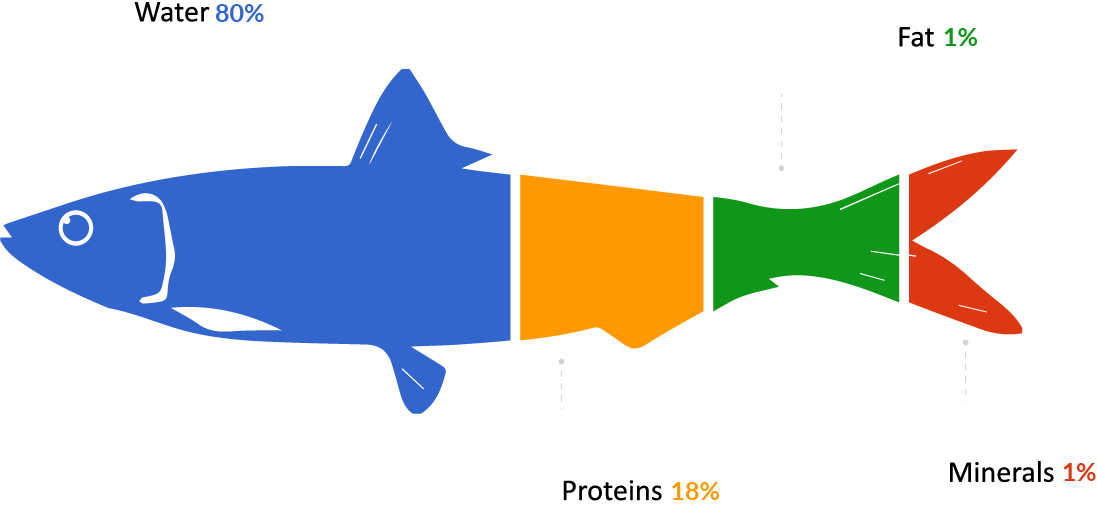
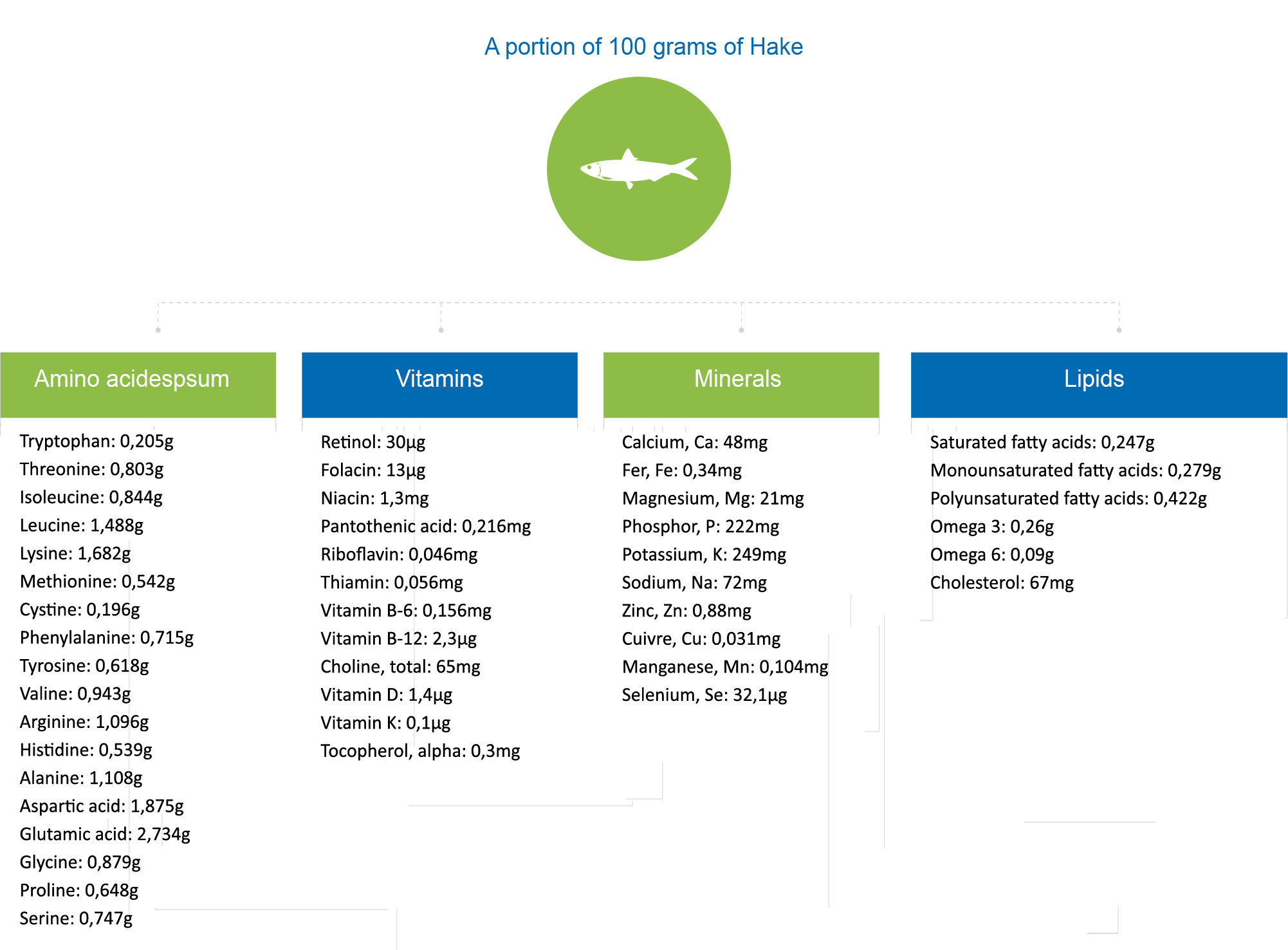
The hake is a source of quality protein, it contains the nine amino acids essential to our body. These proteins play a major role in the formation of digestive enzymes, hormones and tissues like the skin and the bones.
Although it contains only a small proportion of lipids, the hake contains the eicosapentaenoic acid and the docosahexaenoic acid, two fatty acids in the omega 3 family with protective effects on the cardiovascular system.
Finally, the hake has a high concentration of selenium, an oligo element with antioxidant properties that have been largely demonstrated.
The Hake provides large quantities of vitamins B, B12, B6 and vitamin D. Its flesh has interesting concentrations of minerals and oligo elements including selenium and phosphorus.
| Nutrient | Rôle |
| Vitamin D |
Vitamin D is closely involved in the health of bones and teeth by making calcium and phosphorus available in the blood, plus other things in order to grow the bone structure. The vitamin D also plays a role in the maturation of cells, including those of the immune system. |
| Calcium |
Calcium is by far the most abundant mineral in the body. It is mostly stored in bones and is an integrated party of it. It contributes to the building of bones and teeth, as well as the maintenance of their health. Calcium also plays a vital role in blood clotting, blood pressure maintaining and muscles contraction (including the heart). |
| Panthotenic acid |
Also referred to as vitamin B5, the pantothenic acid is part of a vital coenzyme that allows us to use the energy of the food we eat. It also participates in several phases of the synthesis (Production) of steroid hormones, neurotransmitters and hemoglobin. |
| Selenium |
This mineral works with one of the main antioxidant enzymes, preventing the formation of free radicals in the body. It also helps to convert thyroid hormones into their active form. |
| vitamin B12 |
This vitamin works with vitamin B9 (folic acid) to produce red blood cells in the blood. It also maintains the nerve cells and the cells making the bone tissue. |
| Phosphorus |
The phosphorus is the second most abundant mineral in the body after the calcium. It plays a vital role in the formation and maintenance of healthy bones and teeth. In addition, it participates among other things in the growth and regeneration of tissues and helps regulating the pH of the blood. Finally, the phosphorus is one of the constituents of cell membranes. |
| Vitamin B6 |
Also known as pyridoxine, it is part of the coenzymes that participate in the metabolism of proteins and fatty acids as well as the synthesis (production) of neurotransmitters (messengers in nerve impulses). It also interacts in the production of red blood cells and allows them to carry more oxygen. The pyridoxine is also necessary for the transformation of glycogen into glucose and it contributes to the proper functioning of the immune system. This vitamin has also a role in the formation of certain components of nerve cells and in the modulation of hormonal receptors. |
| Magnesium |
Magnesium participate in bone development, protein formation, enzymatic actions, muscle contraction, dental health, and the functioning of the immune system. It also plays a role in the metabolism of energy and in the transmission of nerve impulses. |
| Potassium |
It balances the pH of the blood in the body and stimulate the stomach to produce hydrochloric acid, thus promoting digestion. In addition, it facilitates the contraction of muscles, including the heart, and collaborates in the transmission of nerve impulses. |